Escape Behavior of Lizards from an Approaching Predator
A. Bouskila and H. Hallel
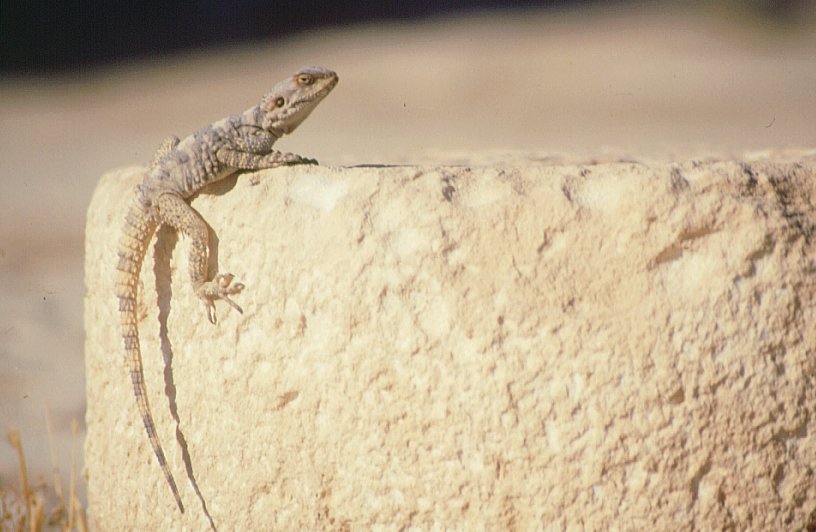
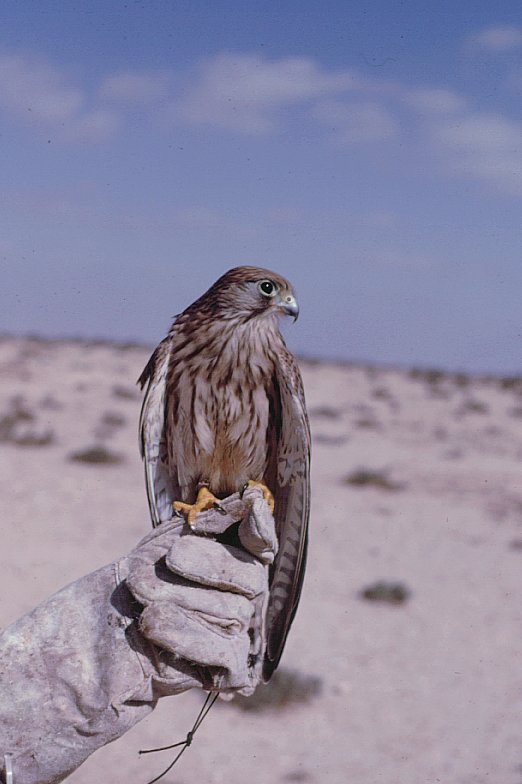
What are the factors that affect the escape behavior of a lizard when a predator is approaching and under which conditions does it remain on its perch rather than escape to a shelter? The answers to these questions are being sought in a study of the diurnal lizards of the genus Laudakia (was Agama) under relatively controlled conditions in semi-natural enclosures. The factors under investigation are body temperature of the lizard, distance from shelter, and the camouflage of the lizard. Predator attacks are simulated with falconry-trained kestrels (Falco tinnunculus) that provide a repeatable stimulus at the time selected by the investigators. Body temperatures of the lizards are measured with radio-telemetry and are used to select the timing of the experiments. The location of the shelter and the coloration of the perchare under control of the researchers. So far it was found that cold lizards remain longer on the perch when they have a shelter in close proximity, compared to lizards with a shelter 2 meter away. Warm lizards escape from the approaching predator without delay, regardless of shelter distance. The lizards may be taking into consideration not only the benefit of escaping the predator, but also the costs and missed opportunities associated with the escape. Whether camouflage affects the escape response is still under investigation, as well as the question: Are camouflaged lizards exposed to a reduced rate of predation in the field.This aspect is being investigated by exposing lizard rubber models on natural perches, and comparing the attack rates on the models between the camouflaged and the conspicuous.
 |
 |
||
| Laudakia stellio |
(photo: A.
Bouskila)
|
F. tinnunculus |
(photo: A.
Bouskila)
|